
Continue Exploring
Related Treatments
Physician-Directed Vascular Treatment · Lakewood Med Spa · Dallas, TX
Redness & Rosacea in Dallas
Calmer Skin · Reduced Flushing · Vascular Control
Rosacea is a chronic inflammatory skin condition characterized by persistent facial redness, visible blood vessels, flushing episodes, and in some cases, papules and pustules. It most commonly affects the central face — cheeks, nose, forehead, and chin — and tends to worsen with triggers such as heat, sun exposure, alcohol, spicy foods, and emotional stress.
At Lakewood Med Spa, rosacea is treated medically with a combination of vascular laser technology, topical prescription agents, and trigger management — tailored to your rosacea subtype and skin tone.
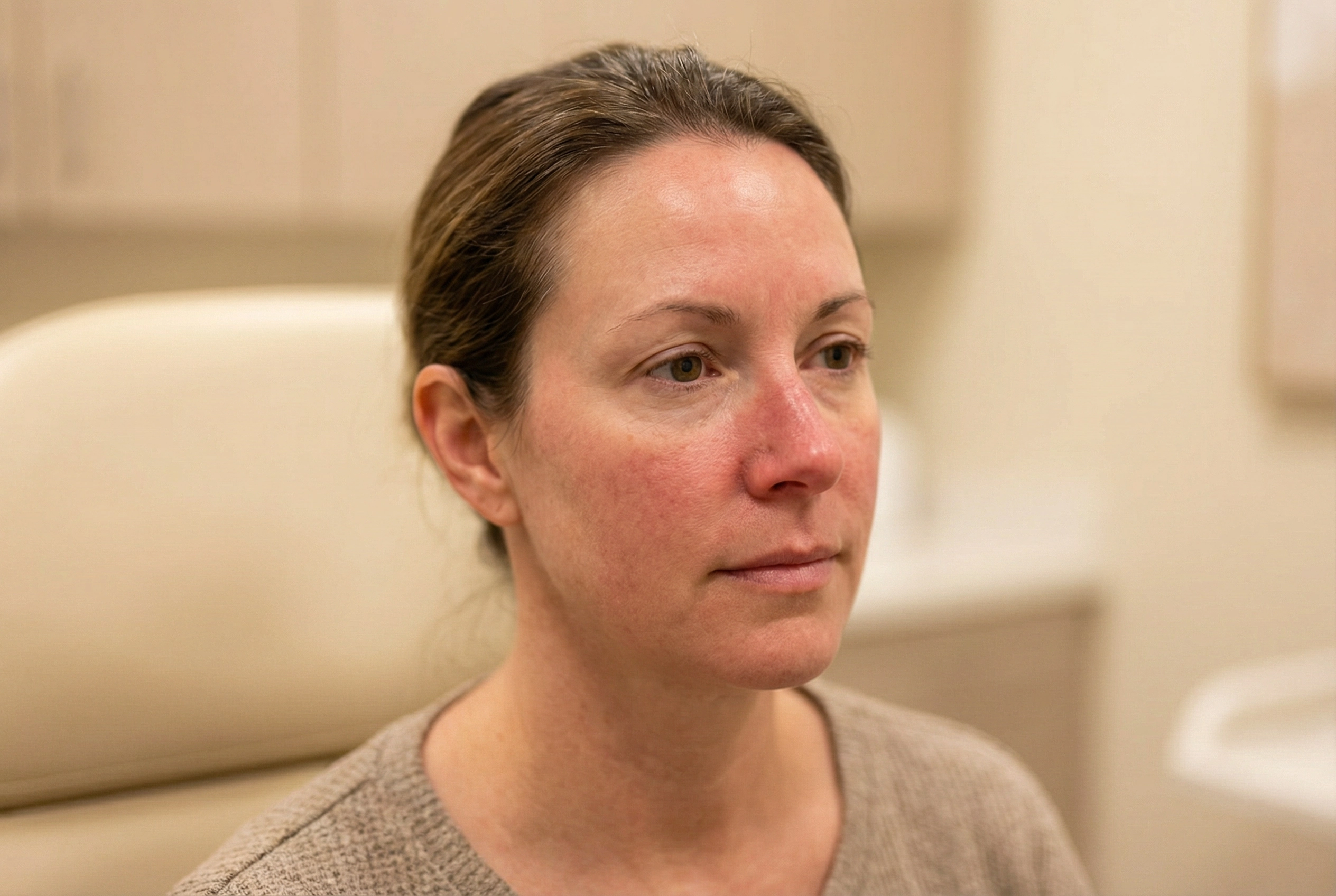
Understanding Rosacea
Rosacea Subtypes We Treat
Most patients present with overlapping subtypes. Accurate classification guides treatment selection and avoids worsening the condition.
Is This You?
Who This Page Is For
Rosacea affects all skin tones. Darker skin tones may present with less visible redness but still experience flushing, sensitivity, and vascular changes.
How We Treat It
Rosacea Treatment Technologies at Lakewood Med Spa
Effective rosacea management typically combines vascular laser treatment with prescription topicals and lifestyle trigger management. No single treatment eliminates rosacea permanently, but consistent management significantly reduces redness and flare frequency.
DPL Photofacial (Vascular Mode)
→Narrow-band intense pulsed light targets oxyhemoglobin in visible capillaries and diffuse redness — the gold standard for ETR rosacea.
Learn More →
Pico Laser (Vascular)
→Ultra-short picosecond pulses selectively target vascular lesions and diffuse redness with minimal thermal damage to surrounding tissue.
Learn More →
DuoVive Non-Ablative Laser
→Gentle non-ablative laser reduces background redness and improves skin barrier function with minimal downtime.
Learn More →
Prescription Topicals
→Azelaic acid, metronidazole, ivermectin, and brimonidine are prescribed based on rosacea subtype and severity.
Learn More →
Treatment Planning
Recommended Treatment Pathways
Mild Diffuse Redness
DPL Photofacial series (3–4 sessions) + prescription azelaic acid or metronidazole topical. Trigger identification and avoidance counseling.
Visible Capillaries + Flushing
DPL Photofacial (vascular mode) or Pico Laser for targeted vessel clearance + topical brimonidine for acute flushing episodes. Maintenance sessions every 3–6 months.
Papulopustular Rosacea
Oral antibiotics (doxycycline) or ivermectin cream for inflammatory component + DPL for background redness. Avoid retinoids and harsh exfoliants during active flares.
All treatment plans are designed by our physician based on your rosacea subtype, Fitzpatrick skin type, and prior treatment history.
Managing Rosacea
Common Triggers to Avoid
Trigger avoidance alone does not treat rosacea but significantly reduces flare frequency and severity between treatment sessions.
What to Expect
Realistic Outcomes
Results vary based on rosacea subtype, severity, and consistency of trigger management. Most patients see meaningful improvement within 6–8 weeks of starting treatment.
Real Results
Before & After Results
Before / After 3–6 Treatments
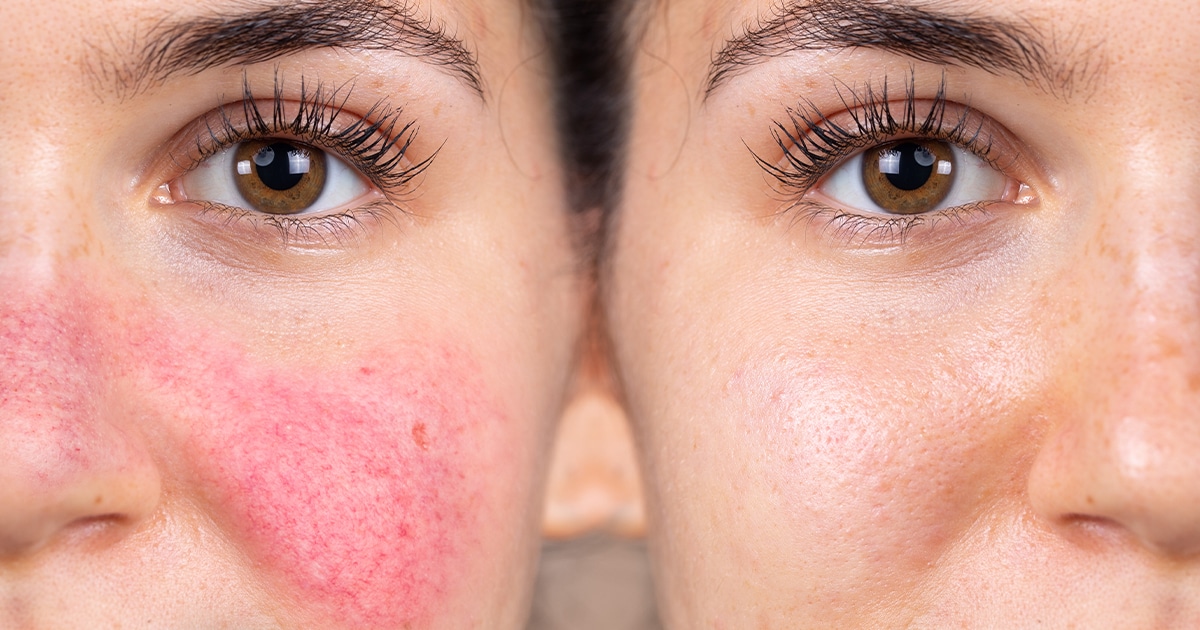
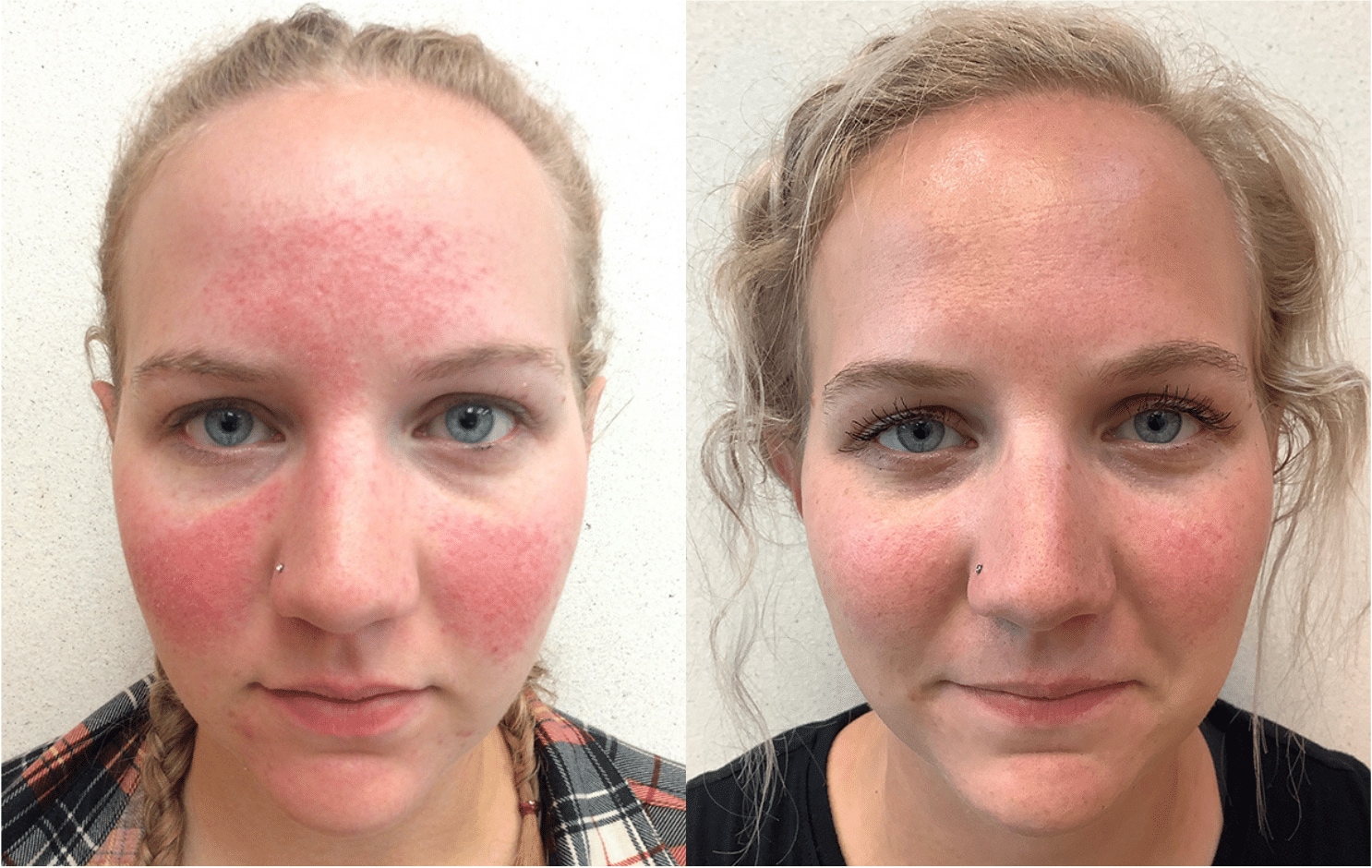
Individual results may vary. Photos show real patients treated for rosacea and facial redness.
Common Questions
Rosacea FAQ
Rosacea Treatment Dallas, TX
Ready to Calm Your Skin?
Schedule a physician-directed rosacea consultation at Lakewood Med Spa in Dallas. We'll assess your rosacea subtype, skin tone, and triggers — then build a treatment plan designed for lasting results.