
Physician-Directed Lifting & Tightening
PDO Thread Lift
Non-Surgical Lifting for Face, Neck & Body Laxity.
PDO (polydioxanone) threads are absorbable sutures placed beneath the skin to mechanically lift sagging tissue and trigger a sustained collagen-remodeling response. The result is structural repositioning of soft tissue combined with progressive skin quality improvement — without surgery, general anesthesia, or extended recovery.
Face · Neck · Jawline · Abdomen · Arms · Knees · Inner Thighs
Schedule PDO Consultation →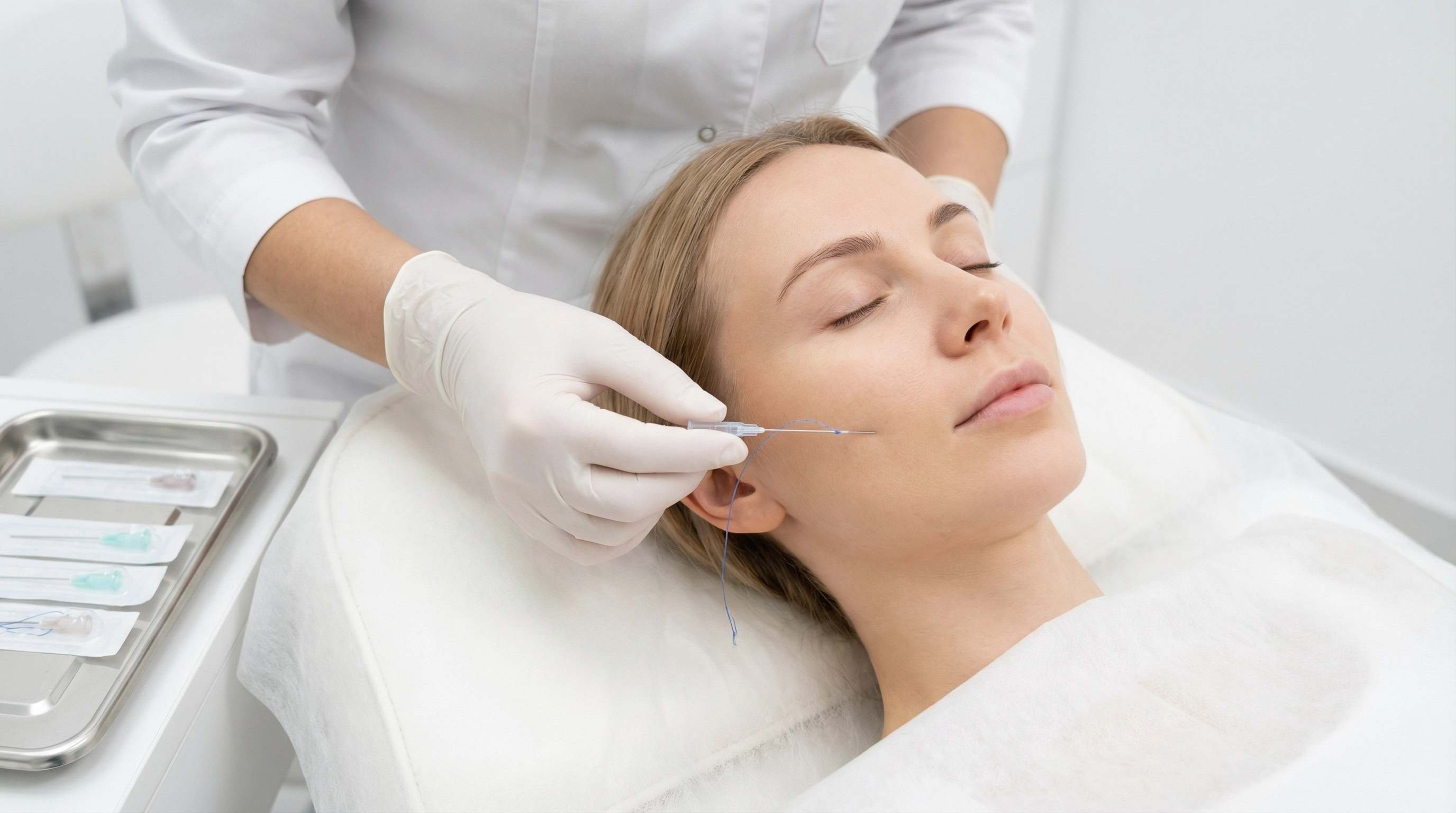
PDO Thread Pricing
Two distinct PDO thread options
PDO Smooth Threads and PDO Thread Lift are different treatment options. Your physician can explain which approach may fit your goals and treatment area.
PDO Smooth Threads
From $400
Non-lifting threads used for treatment plans focused on skin quality and collagen stimulation.
PDO Thread Lift
From $1,200 per area
Lifting threads for physician-guided plans where a mechanical lift is being considered.
If sagging skin along your jawline, neck, or midface is making you consider a facelift — but you're not ready for surgery — you're not alone. PDO threads offer a non-surgical alternative that lifts and tightens while stimulating your body's own collagen production.
The Science
How PDO Threads Work
Polydioxanone is a synthetic, fully absorbable polymer with a proven safety record in cardiovascular and orthopedic surgery. When introduced subdermally via fine cannulas or needles, PDO threads work through two distinct mechanisms simultaneously.
01
Immediate Mechanical Lift
Barb and cog threads contain directional anchors that physically grasp and reposition ptotic (descended) tissue the moment they are placed. This provides an immediate visible improvement in contour and definition.
02
Sustained Collagen Induction
The presence of the foreign suture triggers a controlled fibrotic response. Fibroblasts migrate to the thread, depositing new collagen and elastin along its length. As the PDO dissolves over 4–6 months, a durable collagen scaffold remains in its place.
03
Progressive Skin Quality Improvement
Smooth and twist threads placed in a mesh pattern improve skin texture, hydration, and fine-line appearance through diffuse collagen stimulation — independent of any mechanical lift effect.
Thread Types
Three Distinct Thread Architectures
Not all PDO threads are the same. Each architecture serves a different purpose, and most comprehensive treatment plans incorporate more than one type. Your physician will select the appropriate combination based on your anatomy, degree of laxity, and treatment goals.
Smooth (Mono) Threads
Collagen Stimulation
Single-strand threads without barbs or twists. Placed in a grid or fan pattern, they stimulate fibroblast activity and collagen production throughout the treated area. They do not produce mechanical lift but significantly improve skin quality, texture, and fine-line appearance over time.
Best For
Twist (Screw) Threads
Volume & Hydration
Two or more threads wound helically around the insertion needle. The spiral structure increases surface area contact with tissue, enhancing volumizing and hydrating effects. Particularly effective in areas with volume loss or hollowing where collagen density needs to be rebuilt.
Best For
Barb / Cog Threads
Mechanical Lift
Threads with directional barbs or cogs that physically anchor into the subdermal tissue and fascia. When tensioned, they reposition descended soft tissue — lifting the midface, jowls, brows, neck, and body skin. This is the primary thread type for patients seeking a visible, structural lift.
Best For
Face & Neck
Face & Neck Treatment Zones
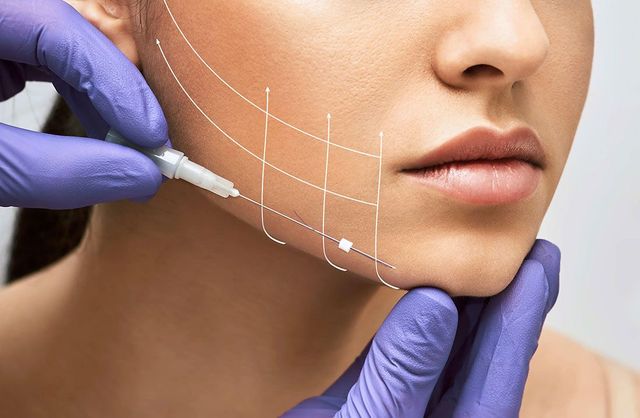
The face and neck are the most commonly treated areas with PDO threads. Each zone requires a distinct approach in terms of thread type, depth of placement, and vector of lift. Our physicians plan each treatment using a detailed anatomical assessment to ensure natural-looking, proportionate results.
Midface & Cheeks
Barb threads placed along the zygomatic arch restore the natural ogee curve, lifting descended cheek fat pads and softening nasolabial folds without adding volume.
Jowls & Lower Face
Cog threads anchored at the temporal fascia reposition jowl tissue superiorly, re-defining the mandibular border and restoring a cleaner jawline contour.
Brow & Forehead
Targeted barb threads elevate a descended lateral brow, opening the eye area and reducing hooding — often complementing neuromodulator treatment.
Neck & Platysma
Smooth threads improve neck skin quality and crepiness, while barb threads can address early platysmal banding and restore a more defined cervicomental angle.
Perioral & Lip Lines
Fine smooth and twist threads placed around the mouth improve lip line definition, reduce vertical lip lines, and restore subtle volume to the vermilion border.
Body Laxity
Body Treatment Zones
PDO threads are not limited to the face. Body thread lifting addresses skin laxity in areas where weight loss, aging, or postpartum changes have left skin without adequate structural support — offering meaningful improvement without the recovery demands of surgical body lifting. PDO threads are also used for gluteal collagen stimulation and lifting — a non-surgical approach to improving buttock contour, projection, and skin quality.
Gluteal PDO Threads: What to Know
PDO thread gluteal lifting uses barb and cog threads placed in the subdermal plane to mechanically lift descended tissue and stimulate collagen production over 4–6 months. This is best suited for patients with mild to moderate laxity seeking improved contour without surgery. For patients seeking significant volume addition, we also offer Sculptra and Radiesse gluteal biostimulator injections — which can be combined with threads for a comprehensive non-surgical gluteal enhancement protocol.
Pairs Well With
Combine PDO thread lifting with Sculptra or Radiesse biostimulators for a comprehensive non-surgical gluteal enhancement protocol — mechanical lift plus volume.
Important: Setting Realistic Expectations for Body Threads
Body thread lifting produces meaningful improvement in mild to moderate skin laxity. It is not a substitute for surgical body lifting procedures in patients with significant skin excess. At your consultation, your physician will provide an honest assessment of what thread lifting can realistically achieve for your specific anatomy — and will recommend alternative or complementary treatments if threads are not the optimal solution.
What to Expect
What to Expect
01
Consultation & Planning
Your physician performs a detailed facial or body assessment, photographs the treatment area, and develops a customized thread plan — including thread type selection, entry points, and lift vectors.
02
Preparation
Topical numbing cream is applied for 20–30 minutes prior to treatment. Local anesthetic may be administered at insertion sites for additional comfort. The treatment area is cleaned and marked.
03
Thread Placement
Using fine cannulas or needles, threads are introduced into the subdermal plane. Barb threads are tensioned and anchored; smooth threads are placed in the desired pattern. Most full-face treatments take 45–75 minutes.
04
Immediate Post-Care
Mild swelling, bruising, and tenderness are expected for 3–7 days. Temporary dimpling or puckering at insertion sites typically resolves within 1–2 weeks. Cold compresses and gentle care are recommended.
05
Recovery & Activity
Most patients return to desk work within 24–48 hours. Strenuous exercise, facial massage, dental procedures, and sleeping face-down should be avoided for 2 weeks. Full results develop over 2–3 months.
06
Collagen Development
The PDO sutures dissolve over 4–6 months. During this period, collagen production continues to build. Final results — including the full collagen-remodeling benefit — are typically visible at 3 months and can persist for 12–18 months.
Why Lakewood
Why Physician Direction Matters in Thread Lifting
Anatomy-Based Planning
Thread placement requires precise knowledge of facial anatomy — including the location of motor nerves, vascular structures, and fascial layers. Physician-directed treatment significantly reduces the risk of asymmetry, vascular injury, and nerve damage.
Correct Thread Selection
Choosing the wrong thread type or placing threads at the wrong depth produces poor results or complications. Our physicians select thread architecture based on tissue quality, laxity degree, and anatomical zone — not a one-size-fits-all protocol.
Integrated Treatment Planning
PDO threads work best as part of a full rejuvenation plan. We assess whether threads should be combined with neuromodulators, fillers, or energy-based treatments to achieve balanced, natural-looking results.
Honest Candidacy Assessment
We will tell you clearly if thread lifting is not the right solution for your degree of laxity. Patients with significant skin excess are better served by surgical consultation, and we will say so — because your outcome matters more than a treatment sale.
Is This Right for You?
- ✓ You have mild to moderate skin laxity in the face, neck, or body
- ✓ You want visible lifting without surgery or general anesthesia
- ✓ You're looking for results that improve over time as collagen builds
- ✓ You want a treatment with minimal downtime (typically 3-5 days)
- ✓ You're interested in combining threads with other treatments for enhanced results
- ✓ You want a non-surgical alternative to a traditional facelift
Common Questions
Frequently Asked Questions
Get Started
Ready to Discuss PDO Threads?
Schedule a consultation with our physician team. We will assess your anatomy, explain which thread types are appropriate for your goals, and provide an honest recommendation — including whether threads are the right solution for you.
Call to Book Consultation →Before & After Results
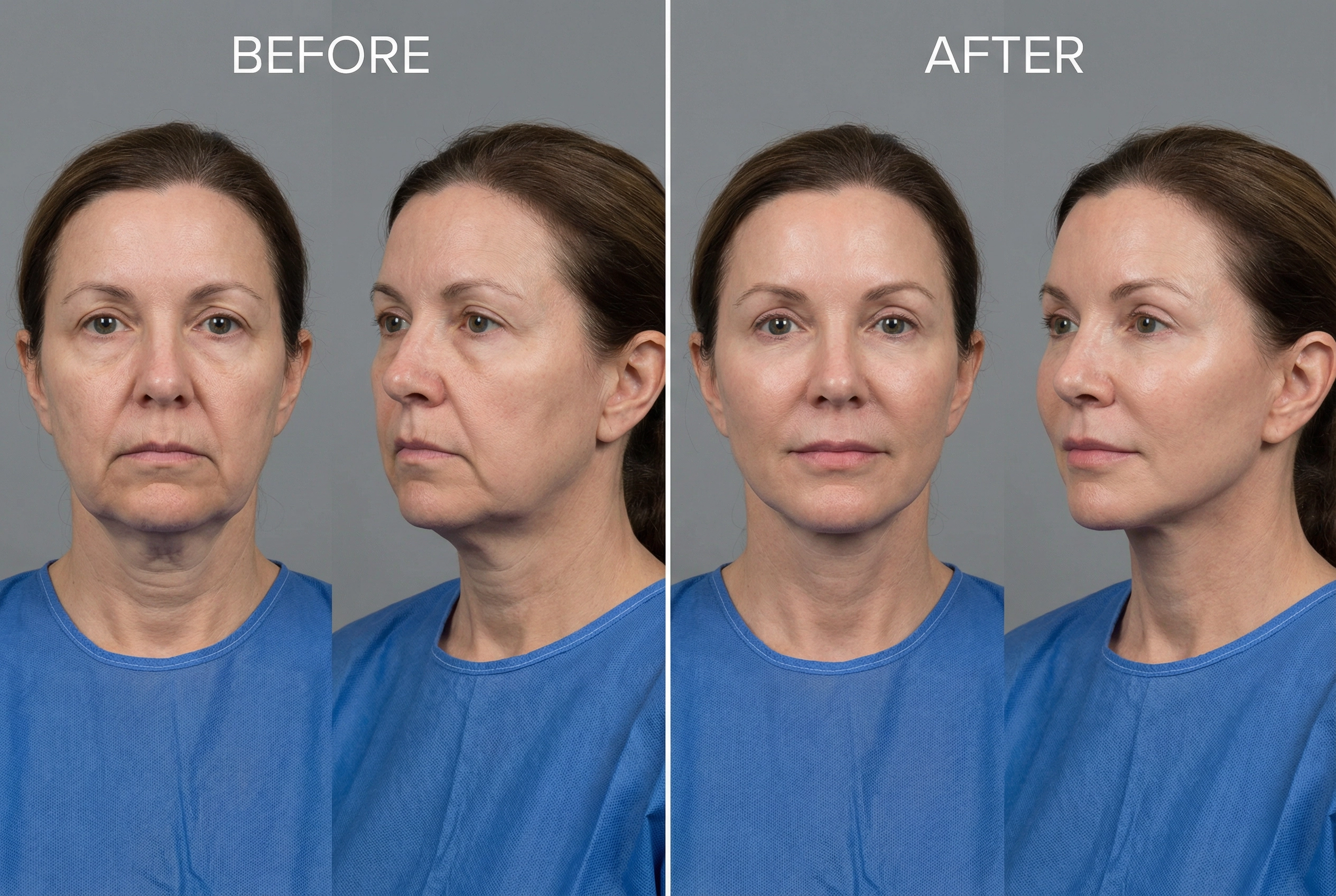
Before and after photos shown are representative results achieved with this technology. Individual results vary. Photos are sourced from published clinical literature and manufacturer documentation and are not patients of Lakewood Med Spa.
Protect Your Investment
Your PDO Threads results depend on proper skincare support. Medical-grade SkinCeuticals products enhance and extend your treatment outcomes.
Continue Exploring